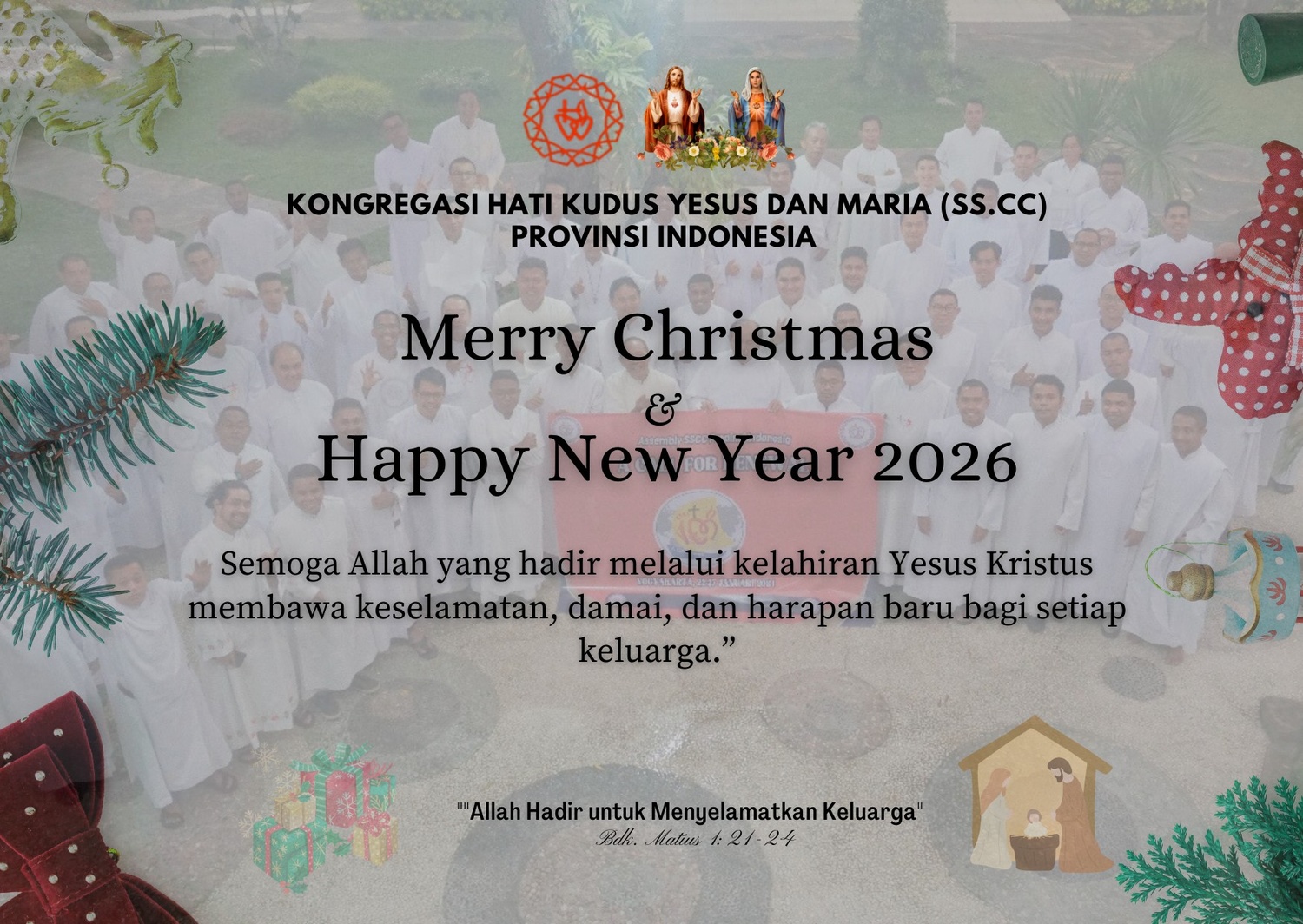
Batam, December 23, 2025. In the 8th provincial chapter, we decided to devote our first year to youth as the first priority. Most commission and team, as well as local communities and area coordinators, developed their action plan around youth activities. Every community, tried in one or more ways, to welcome youth in their midst and activities. The area of Sumatra held their youth gathering in July, as this is their program every two years. As a province, we concluded our 2025 focus with a week of study at Batam Oase Center, together with the Bishops’ Conference youth commission to align us with the Indonesian Church’s movement. After one week of learning, the area coordinators; Jawa, Sumatra and Batam-Bangka-Singapore (BBS) developed plans to implement the insights on youth in their respective area. This ending became a new beginning for action on youth, putting into practice all the theory and inspiration from the week of study. As provincial council took time to evaluate with all commissions and team on December 10, and with the local superiors and area coordinators on December 11, we learn that most of our 2025 plans worked well. Learning from this year, we have planned our 2026 program well: the year of pilgrimage toward holiness, following the life models of our two brothers Mateo Crowly and Rolf Reichenbach. We want to continue with youth in 2026 as preparation for the provincial youth gathering in 2027, and the possible world youth day in South Corea.
To make this youth movement more congregational, I like to present to you the six stages of youth pastoral accompaniment proposed by our sisters in their 37th general chapter and shared with us at the ministry Seminar in February 2025 in Calcutta. We can use these stages to evaluate what we have done and as a guide for improvement in 2026.The first stage is “from call to a connected life”. Here, the most important element is our openness to welcome youth without prejudice. It is about creating a save, home-like atmosphere where youth come in and find a place and someone to listen. We and our community become save place for building bonds among them and us. As they found us and our place as a refuge, we move to the second stage: “From being supported to be rooted”. Our welcome without prejudice, along with letting them participate actively, allowing them -slowly and surely-, to delve deeper and discover who we are and what we do essentially. Their inner search may lead them to the same root, for example, a place to be silent, to be themselves, or to be with Jesus as they desire. They may find themselves in peace because the source of peace is in Jesus, who repair the sinful and broken world out there. This is not an egoistic peace but one that carries hope to bring peace to their own brokenness in the broken world. From there, we move to the third level: “from a deeper life to the life of Gratuity”. The key objective is to bring them before Jesus, who call them out of love. If we can guide them into this level, the sense of gratitude will fill their lives, affirming that they are worthy to be loved as they are. From the experience of being loved, they move to know Him deeper- His words, His teaching and His mission. In this stage, they progress from gratitude to a sense of purpose in life, both as personal and communal. For this reason, abiding with Him in reparative adoration moves them to work for the reparation of their own brokenness and that of the world. Having this sense they move to the fourth stage: “from relation to Jesus to commitment to Jesus and to be like Jesus”. Here, we invite them to look at some models who committed their whole lives to Jesus, such as Damian, Eustaquio, and Mateo, and Rolf Reichenbach. In the Indonesian context, Rolf Reichenbach’s experience with youth discernment group can be revived. Some sister and brother from Generation X who entered our congregation came from Rolf Reichenbach’s discernment group. When young people reached the stage of commitment to follow Jesus- either in religious life or as layperson- it becomes easier to invite them to enter into the fifth stage: “form surrender to the cross”. To follow Jesus as Christian means taking on His attitude and action of Jesus; compassion, forgiveness, acceptance and concern for those who suffer. Here, we can dialogue with them about uniting their commitment the Crucified One. We can also affirm them to identify with us, as sons and daughters of the Cross-or the “death” in the formula of our vows. With this, we reach to the final stages of our accompaniment: “heart that communicate the joy of Risen life”. By experiencing this process, we hope the youth themselves will share their journey-from a call to experience God’s love and sharing it with their companions. Every Christian is call to be with Jesus in the cross, but also to experience resurrection. Their transformation facilitates transformation in others.
These are the six stages of journeying with the youth in the SS.CC way. We cannot define a time line for this accompaniment, as every person has unique development. The most important thing is that we sense each other’s development and help them affirm their stage of growth. It is very contextual with our setting and the youth themselves. Let us express our gratitude of learning from past and take this step forward with these guidelines.
Pankrasius Olak Kraeng
Provincial